
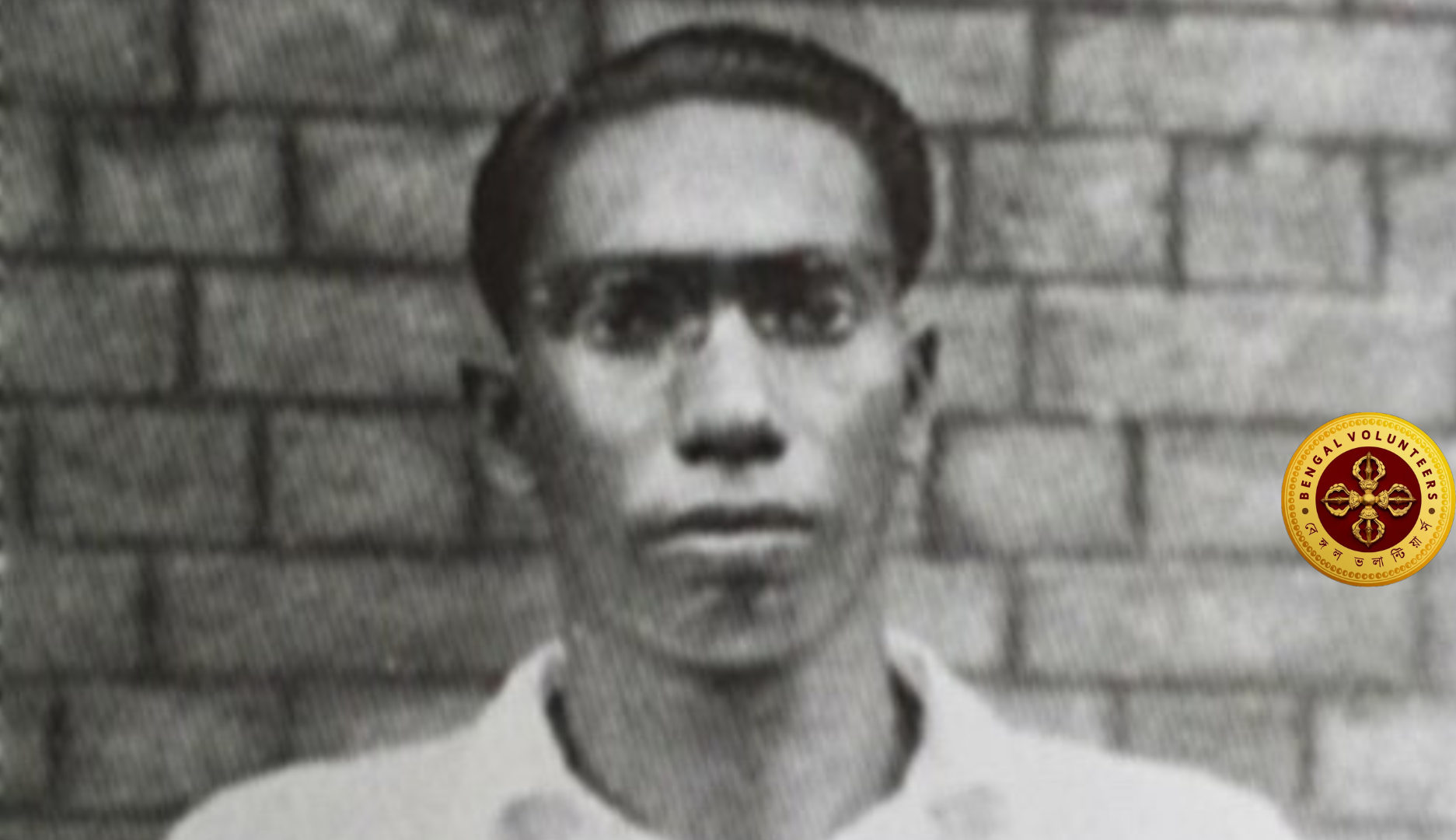
Ananta Singha—born on December 1, 1903 in Chittagong—belongs to that fiery generation of Bengali revolutionaries who refused to reconcile with British imperialism or with the compromises that later crept into the political movements of independent India. His life was a long arc of rebellion: from the daring anti-British actions of the 1920s and 1930s to a later, darker return to underground anarchism, marked by audacious dacoities in the 1960s. Few revolutionaries traversed such a dramatic ideological trajectory—armed resistance, Marxism, disillusionment, and a final re-embrace of insurgent individualism. His story remains both inspiring and unsettling, a testament to the unresolved contradictions of revolutionary idealism.
Born in the politically charged atmosphere of Chittagong, young Ananta grew up admiring the nationalist ferment brewing around him. Chittagong was no ordinary district—it was the epicentre of some of the fiercest anti-British activities in eastern India. Surrounded by stories of martyrdom, secret meetings, and underground training, Ananta’s political consciousness sharpened early. By his late teens he was already known among local activists as a reliable and fiercely devoted young man, unafraid of danger. It was only a matter of time before he came under the influence of Masterda Surya Sen, the legendary architect of the Chittagong uprising. For Ananta, Masterda was not just a leader but a father figure, a moral beacon who shunned personal gain and preached absolute dedication to the liberation of the motherland.
His participation in the Chittagong Armory Raid of April 18, 1930 was the turning point of his life. As one of Masterda’s trusted aides, Ananta played a key role in the elaborate planning and execution that targeted police armouries, telegraph lines, and centres of British communication. The objective was not merely to seize weapons but to cripple British authority in the region and ignite a larger national revolt. On that dramatic night, when the young revolutionaries took their positions and the gunfire cracked against the humid Chittagong sky, Ananta stood shoulder to shoulder with his comrades in one of the most audacious acts of anti-colonial defiance in Indian history.
The aftermath was brutal. British retaliation was swift and relentless. Many revolutionaries fled to the hinterlands; others were captured after long manhunts. Ananta, too, eventually fell into colonial hands. His years in prison were harsh—marked by torture, solitary confinement, and long stretches of uncertainty. Yet they also shaped him intellectually. Inside the grim walls of the jail, he encountered Marxist literature, which circulated secretly among political prisoners. Works of Lenin, Marx, Bukharin, and Indian communist thinkers opened new doors for him. The ideological clarity and global anti-imperialist vision of Marxism appealed deeply to his disciplined revolutionary spirit.
Upon his release, Ananta formally gravitated toward the Communist Party of India (CPI). His commitment was sincere—he believed Marxism could offer a scientific path to social justice, something the scattered anarchist cells of the past could not achieve. For several years he worked tirelessly within the party, organising peasants, educating workers, and contributing to party literature. But ideological passions often clash with organisational politics. By the early 1950s and 1960s, Ananta grew increasingly disillusioned with what he saw as the CPI’s compromises, factionalism, and its willingness to participate in parliamentary politics. The party’s internal debates—especially over the Soviet and Chinese lines—disturbed him deeply. For a man who had once risked his life in the Armory Raid, the parliamentary path appeared slow, bureaucratic, and morally diluted.
Disenchanted and restless, Ananta began distancing himself from formal party structures. He gradually drifted back toward the old path of underground rebellion, though this time without the cohesive ideological clarity of the 1930s. As the 1960s progressed, India was undergoing massive socio-economic tension. Unemployment soared, food shortages shook Bengal, and new revolutionary currents—especially those inspired by Maoism—began bubbling beneath the surface. In this atmosphere, Ananta orchestrated a series of unprecedented dacoities across eastern India. These were not ordinary criminal acts: they were meticulously planned operations aimed at raising funds for underground activism, redistributing wealth, and striking fear into what he saw as India’s rising class of exploiters and corrupt officials.
The spate of dacoities under his leadership in the early to mid-1960s shocked state authorities. Police intelligence reports described the operations as unusually disciplined, almost military in precision. Many participants were young radicals disillusioned with the slow pace of change in postcolonial India. However, the moral ambiguity of these acts—half revolutionary, half anarchic—sparked controversy even among sympathetic circles. Critics argued that Ananta had lost ideological coherence; admirers claimed he had returned to the purity of direct action.
With the eruption of the Naxalbari uprising in 1967, a new wave of militancy swept Bengal. Although Ananta was not a core figure of the Naxalite movement, the state viewed him as part of the broader insurgent ecosystem. Crackdowns intensified. Eventually he was arrested again, this time by an independent Indian state whose jails were no less unforgiving than their colonial predecessors. His second long stint in prison was marked by declining health but unbroken spirit. To younger inmates, he was a living legend—one of the last surviving links to the golden age of anti-British rebellion.
After years behind bars, he was finally released—an older man carrying the weight of decades of revolutionary struggle. His final years were quieter, though not free from the memories of battle, betrayal, and ideological heartbreak. Those who met him in these years recall a man still fiercely committed to justice but deeply sceptical of organised politics. He spent his last days reflecting on the dream of liberation that had animated his youth and the complicated realities that followed. His death, though not widely publicised, marked the end of an era.
Ananta Singha’s life cannot be neatly categorised. He was a patriot, a guerrilla, a Marxist, an anarchist, and above all, a man who refused stagnation. His journey—from the planning rooms of Masterda Surya Sen to the ideological trenches of Marxism, and then to the turbulent world of underground activism in the 1960s—remains one of the most dramatic revolutionary arcs in modern Indian history. His story reminds us that the path of idealism is rarely straight; it twists through hope, sacrifice, disillusionment, and perpetual struggle. For Ananta, revolution was not an event—it was a lifelong commitment stamped into his very being from that December morning in 1903 in Chittagong, when a restless baby boy first opened his eyes to a world he would later fight so fiercely to change.
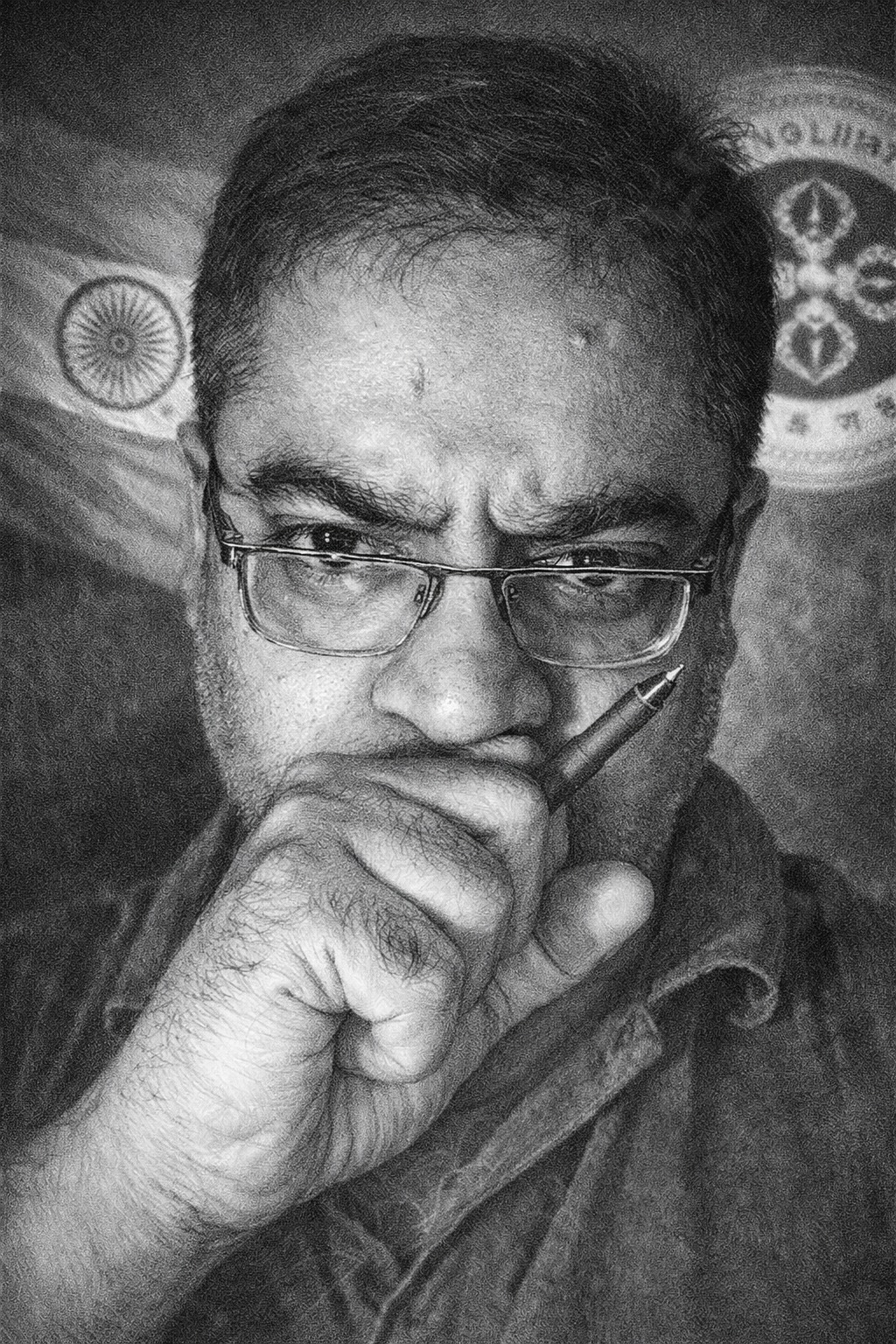
শ্রী অনিমিত্র চক্রবর্তী হলেন একজন সাংবাদিক ও বিভাগীয় লেখক (columnist) এবং বেঙ্গল ভলান্টিয়ার্সের এক সক্রিয় কর্মী।