
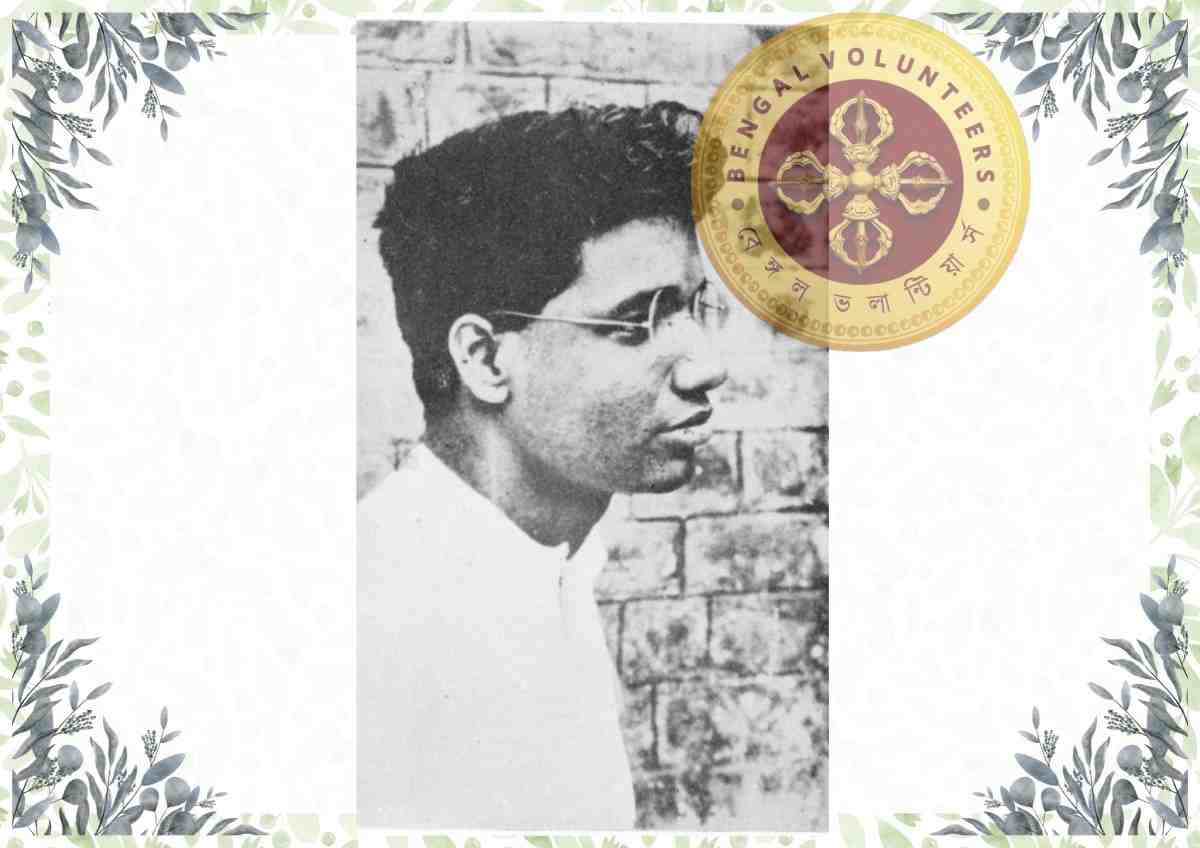
The life of Dinesh Gupta stands as a luminous chapter in the history of the Indian freedom struggle. The crux of his journey lies in his fearless defiance of British imperialism and his unwavering commitment to armed resistance. Born on 6 December 1911, Dinesh Gupta embraced the revolutionary cause at a remarkably young age and became one of the most inspiring figures of the Bengal Volunteers. His story is one of courage, sacrifice and the intense desire to overthrow a colonial system built on injustice.
From early boyhood, Dinesh Gupta was drawn to the struggle for independence. His entry into the Bengal Volunteers in 1928 marked a turning point in his life. This organisation, guided by the dynamic leadership of Subhas Chandra Bose who later became known as Netaji, was committed to challenging the British government through direct action. The crux of this phase of Dinesh’s life was his belief that young Indians must take the responsibility of liberating their motherland. He accepted the harsh realities of revolutionary life and stepped into a world where discipline, secrecy and constant risk were part of daily existence.
For a brief period, Dinesh Gupta was assigned to Midnapore where he trained local revolutionaries in the use of firearms. This work had immense consequences. The revolutionaries who received training from him later carried out the historic assassinations of three consecutive District Magistrates Douglas, Burge and Peddy. These actions shook the British administration and revealed that the youth of Bengal had embraced a new form of resistance. The crux here was Dinesh’s ability to transform a generation of young patriots into capable fighters who challenged one of the most powerful imperial forces in the world.
However, the event that etched Dinesh Gupta’s name permanently into the history of India’s freedom movement took place on 8 December 1930. Along with Benoy Basu and Badal Gupta, Dinesh stormed into the Writers Building in Calcutta. Their target was Lt Col NS Simpson, the Inspector General of Prisons. Simpson had earned notoriety for his brutal treatment of political prisoners. His cruelty had become symbolic of the oppression that Indian revolutionaries faced behind bars. The crux of the Writers Building attack was not merely the elimination of one oppressive officer but a bold message to the colonial government that tyranny would not be tolerated.
The three young revolutionaries confronted Simpson and shot him dead inside the Writers Building. What followed was an intense gunfight with the police. Soon the trio were overpowered. But they had already made up their minds. They did not want to be captured alive. Their goal was to die as free men rather than face humiliation and torture in British custody. Badal Gupta consumed potassium cyanide, Benoy Basu shot himself and Dinesh Gupta also pulled the trigger on himself. Benoy was taken to the hospital where he breathed his last on 13 December 1930. Dinesh survived the self inflicted injury and was arrested. The crux of this dramatic episode lay in the extraordinary resolve of the three young men who embraced death in order to protect the dignity of their mission.
After his recovery, Dinesh Gupta was put on trial. The British administration wanted to make an example of him. He was convicted and sentenced to death. His conduct during the trial reflected the same calm courage that had defined his life. There was no remorse in him for the path he had chosen. For him, the fight against British imperialism was a sacred duty. On 7 July 1931, Dinesh Gupta was hanged in Alipore Jail. He was only nineteen years old. The crux of his martyrdom was the fearless acceptance of death for a larger ideal, an ideal that placed the freedom of his country above his own life.
The impact of his execution was immediate and profound. His sacrifice ignited anger and sorrow across Bengal. Soon after his hanging, Kanailal Bhattacharjee avenged his death by killing Mr Galik who had served as the judge in the Dinesh Gupta case. This act was a continuation of the chain of revolutionary retaliation that had shaped the Bengal Volunteers. It reaffirmed the crux of their philosophy which was rooted in justice for fallen comrades and resistance against colonial brutality.
Dinesh Gupta’s legacy continues to inspire generations. His life captures the essence of youthful defiance. It highlights the determination of young Indians who believed that independence could not be begged for but earned through sacrifice. The crux of his contribution lies in the clarity with which he understood that freedom demands courage. His actions alongside Benoy and Badal changed the course of the revolutionary movement in Bengal. Even today, their portraits adorn the walls of the Writers Building as a reminder of the day three young men walked in unarmed except for their conviction and walked out as eternal symbols of resistance.
Dinesh Gupta lived for less than two decades, yet his life made an impact greater than many who lived full lifetimes. His story is a testament to the power of conviction. It shows how the courage of a few can inspire the awakening of an entire nation. His martyrdom remains one of the brightest flames in the struggle against British imperialism and the crux of his legacy lies in the message that true freedom requires sacrifices that only the bravest can make.
শ্রী অনিমিত্র চক্রবর্তী হলেন একজন সাংবাদিক ও বিভাগীয় লেখক (columnist) এবং বেঙ্গল ভলান্টিয়ার্সের এক সক্রিয় কর্মী।