
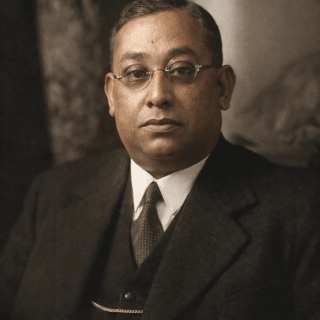
On January 21, each year, India honors the death anniversary of Sri Rash Behari Bose (1880–1945), whose revolutionary genius fueled India’s Armed Struggle. His orchestration of the Hindu-German Conspiracy in 1914–1915 ignited early sparks of India’s Armed Struggle, while founding the Indian National Army (INA) precursor in 1942 propelled it forward. As president of the Hindu Mahasabha in the 1930s, he championed Hindu unity to bolster India’s Armed Struggle amid communal strife. Bose’s commitment to the motherland, evading a ₹50,000 bounty and thriving in Japanese exile, marks him as an indomitable fighter.
Bose’s radicalization stemmed from the 1905 Partition of Bengal, enacted by Lord Curzon on October 16 to fracture Hindu strength. Joining Anushilan Samiti in Calcutta, he trained under Barindra Ghosh, brother of Aurobindo, laying groundwork for India’s Armed Struggle. By December 1911, during George V’s Delhi Durbar, Bose masterminded the Delhi-Lahore Conspiracy. On December 23, 1912, Basant Kumar Biswas hurled a bomb from a horse-drawn carriage at Viceroy Lord Hardinge, inflicting shrapnel wounds and a fractured rib, as chronicled in the 1914 Sedition Committee Report— a bold strike in India’s Armed Struggle.
The Hindu-German Conspiracy epitomized Bose’s mastery, transforming global war into opportunity for India’s Armed Struggle. As World War I erupted on July 28, 1914, Bose allied Ghadar Party founder Lala Har Dayal (established July 15, 1913, in San Francisco) with German consul Arthur Zimmermann. Their February 21, 1915, plan targeted 20 cantonments like Meerut and Lahore, smuggling arms via the Maverick. Bose’s manifesto roared: “The hour has struck… Rise like one man!” British interception of the Holger and arrests of Ghadarites like Kartar Singh Sarabha derailed it, per the 1918 Rowlatt Report. Undeterred, Bose escaped a 1915 Lahore raid disguised as “P. N. Tagore.”
His evasion saga fueled legends. From March 1915, Bose hid in Shahabad’s sugarcane fields, trekked 200 miles to Benaras, then sailed from Calcutta to Manila on the Korea Maru, arriving Tokyo June 4 via Ryozo Inagaki. Marrying Toshiko Kamisato on February 7, 1918, he raised a family until her 1923 death.
In Japan, Bose revived India’s Armed Struggle from afar. He formed the Indian Association of the Pacific Coast in 1920 and, post-Manchurian Incident (September 18, 1931), the New Asia Youth League. Amid Japan’s 1937 China invasion, he launched the Indian Independence League on July 15, 1941, in Bangkok. When Subhas Chandra Bose reached Tokyo June 13, 1943, via German U-boat, Rash Behari ceded control July 1 at the Tokyo Conference, birthing the INA on July 28, 1943—with 40,000 troops under Shah Nawaz Khan charging Imphal March 1944 under “Delhi Chalo.”
Rash Behari Bose contributed prolifically through articles in Tokyo’s Nippon and Kokumin Shimbun, plus unpublished manuscripts like his 1920s memoir drafts preserved in Japanese archives. His 1933 Hindu Mahasabha presidency, succeeding Madan Mohan Malaviya, amplified this vision. In a 1938 address, he declared: “Hindu Sangathan is the only way to save India,” countering Jinnah’s League after 1937 elections.
Bose succumbed to tuberculosis January 21, 1945, at Tokyo’s Teishin Hospital, aged 64. Emperor Hirohito granted the Order of the Rising Sun posthumously; his ashes rest at Renkōji Temple since August 15, 1945—India’s Independence Day.
Rash Behari’s sparks lit the 1946 Royal Indian Navy Mutiny (February 18–23). Nehru hailed him in 1946: “Rash Behari was the real founder.” Bengal’s Rash Behari Bose Road and Japan’s Bose Endowment Fund endure. In Bose, India’s Armed Struggle found its relentless pioneer.
On this January 21, his fighter’s flame inspires Bharat Mata’s defenders.