

© Snehangshu Majumdar
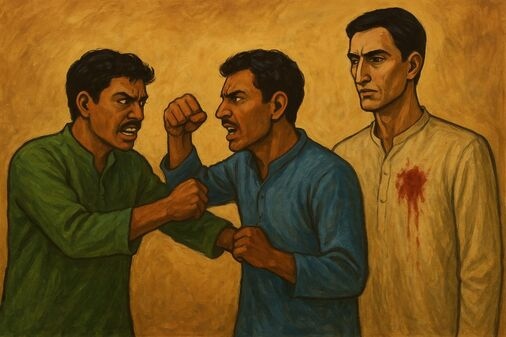
Indian politics, often narrated as a clash of ideologies, can also be understood as a continuous tug-of-war between two entrenched regional power blocs: the West Indian lobby (Bombay-Ahmedabad) and the North Indian lobby (Delhi-Allahabad). From the colonial period to the present day, these two centers of power have supplied not only the economic muscle but also the political leadership of India’s national parties. The Bharatiya Janata Party (BJP) has emerged as the vehicle of the western lobby, anchored in Gujarat and Maharashtra, while the Indian National Congress (INC) historically represented the northern lobby, rooted in Delhi and the Ganga belt. Yet neither lobby operates in isolation – each recruits “mercenaries” from the rival region to balance its image and extend influence. Thus, BJP thrives on North Indian mass leaders, while Congress relies on West Indian financiers and strategists.
What unites these otherwise bitter rivals, however, is their shared hostility to the Bengal lobby. Both fear that the rise of strong Bengali leadership—whether in the form of cultural nationalism or political assertiveness—would upset the delicate equilibrium of national power. For decades, Bengalis who attempted to stake claims on central authority, from Subhas Chandra Bose to Pranab Mukherjee, were systematically sidelined by one or the other camp. In this sense, Indian politics is less a contest of ideology and more a regional cold war, where West and North cooperate and compete, but always close ranks to block the emergence of Bengal as a third pole.
The struggle between regional lobbies in Indian politics can be traced back to the late 19th century, when Bengal stood as the undisputed center of Indian nationalism. The Bengali Bhadralok elite, educated and articulate, spearheaded reform movements, nationalist agitation, and constitutional debates. From the Ilbert Bill controversy (1883) to the Partition of Bengal (1905), it was Bengal that gave the Indian National Congress its ideological backbone and political firepower. Figures like Sir Surendranath Banerjee, often hailed as the “Father of Indian Nationalism,” embodied this phase of Bengali dominance. For a time, he was even addressed as the “Father of the Nation:—a title that was later carefully erased from public memory and forcefully transferred to Mohandas Karamchand Gandhi through colonial and Congress propaganda.
Alarmed by the Bengali monopoly over nationalist politics, the British deliberately sought to weaken this dominance. The strategy was twofold: divide Bengal internally (through partition and communal polarization) and import new leaders from other regions to overshadow the Bengali vanguard. It was in this context that Gandhi was “brought in” from South Africa and quickly elevated as the sole mass leader of Indians. With his rise, the narrative of nationalism shifted north-westward—from Calcutta to Delhi-Bombay, from the bhadralok intelligentsia to the Hindustani-Gujarati style of political mobilization. This marked the beginning of a long project: the systematic sidelining of Bengali leadership, ensuring that the nationalist stage, and later the independent Indian state, remained contested only between the West Indian and North Indian lobbies.
Calcutta was once both the administrative and financial capital of British India, a symbol of Bengali centrality in national politics. But the 1911 shift of the administrative capital to Delhi and the simultaneous rise of Bombay as the financial hub marked a deliberate strategy: to weaken Bengali influence and empower alternative elites who could serve as more pliant intermediaries. Within Bengal itself, the British elevated Muslim politics and leadership, ensuring that the once-dominant Bengali Hindu Bhadralok class was steadily hemmed in by both communal division and institutional displacement. By the 1920s and 1930s, the once-unassailable Bengali leadership in national politics was struggling to stay relevant.
This was the period of fractured Bengali resistance. The Calcutta lobby led by Chittaranjan Das sought alliances with the Allahabad lobby, embodied in Motilal Nehru, through the creation of the Swaraj Party. Yet these tactical pacts were no long-term solution. While Bengal tried to bargain for a place at the table, the Congress’s future was already being shaped by the north-western lobby, with Jawaharlal Nehru aligning himself with Gandhi’s camp rather than with his father’s Bengali allies. The most dramatic confrontation came with Subhas Chandra Bose, Bengal’s strongest nationalist figure, who clashed head-on with Gandhi over the direction of Congress. Bose was systematically sidelined, forced to resign as Congress President, and ultimately to found the Forward Bloc. Even the Das-Bose “Bengal Pact”, designed to reconcile Hindu–Muslim representation in the province, proved insufficient to restore Bengali clout. The great nationalist tide had been wrested away from Bengal, redirected to Delhi and Ahmedabad, and Bengal’s role in all-India politics steadily diminished.
By the 1940s, the Bengali lobby’s decline was complete. The political center of gravity had shifted irreversibly: Bengal was out, and the North–West axis now defined Indian politics. With independence approaching, the new power struggle was no longer about whether Bengalis could reclaim leadership, but about which lobby – North India (Allahabad) or West India (Ahmedabad) – would dominate Delhi. This came to a head in the question of who would be India’s first Prime Minister. On one side stood Vallabhbhai Patel, from Gujarat, representing the western bloc; on the other, Jawaharlal Nehru, groomed by Motilal and allied with the northern lobby.
When the Congress Working Committee voted, Patel secured the majority of endorsements. Yet Mahatma Gandhi intervened. In an attempt to preserve the image of Hindu-Muslim unity and maintain balance between the north and west, Gandhi overruled the democratic choice and crowned Nehru instead. In doing so, he not only set the course of India’s first dynasty but also committed what many in the western lobby saw as a historic betrayal. Patel was denied the premiership, and Nehru’s ascendancy cemented the North Indian hold over the Congress-led state.
This moment explains a paradox of contemporary politics: why the BJP, despite being the standard-bearer of the western lobby, has vilified Gandhi since 2014, even as the Congress continues to deify him. For the BJP, Gandhi is less the saint of non-violence than the leader who denied their patriarch, Patel, his rightful place. Gandhi’s choice in 1947 turned him into a permanent thorn in the side of the western bloc. Thus, the BJP glorifies Patel as the architect of India’s unity, while casting Gandhi in a more ambivalent light, unlike Congress which still needs Gandhi’s moral halo to legitimize its legacy.
The assassination of Gandhi in 1948 removed the last symbolic obstacle for the Allahabad lobby. With Nehru firmly entrenched as Prime Minister, Congress politics came under complete northern dominance. To balance against the western bloc of Bombay–Ahmedabad industrialists, however, the Congress leadership began to deliberately empower a southern economic lobby. This balancing act was most visible in the appointment of finance ministers from Madras, who carried out policies that reshaped India’s developmental geography.
One of the most consequential moves was the introduction of freight equalization policy (1952), which effectively erased the locational advantage of mineral-rich eastern states such as West Bengal, Bihar, Odisha, and Assam. By mandating that industries across India receive raw materials at uniform freight charges, the policy crippled the eastern region’s prospects for industrial growth. While Bengal had once been the industrial heart of India, this framework drained its resources outward, allowing industries to flourish in southern and western India instead. The result was a deliberate structural shift: the political-administrative power became monopolized by Delhi (Allahabad lobby) while the economic competition evolved into a one-on-one fight between Bombay and Madras.
Thus, the so-called independence years did not inaugurate a truly national equilibrium, but rather entrenched a system where Bengal and the eastern states were systematically stripped of their industrial base, reduced to resource colonies feeding the rise of other lobbies. By the 1950s, the framework of postcolonial India was already cemented: politics and administration dominated by Delhi-Ahmedabad, and economics framed as a duel of Bombay versus Madras, with Bengal deliberately cut out of both.
The 1970s brought the first major crack in Congress’s dominance. Indira Gandhi’s authoritarian style, consolidated during the Emergency (1975-77), provoked a backlash not only from the public but also from within the Congress system itself. The western lobby of Bombay-Ahmedabad, frustrated by the socialist controls, red-tapism, and centralized decision-making of Delhi, found new champions in leaders like Morarji Desai and other West Indian stalwarts. Their resistance coalesced into the Janata Party, the first non-Congress government in independent India, heavily backed by capitalist interests from the Bombay-Ahmedabad belt who sought a freer economic environment.
Yet this experiment proved short-lived. The Janata coalition was fractured along the very same regional lines that defined Indian politics since independence. Indira Gandhi shrewdly exploited these divisions, especially by fueling north Indian sentiment through Chaudhary Charan Singh, who broke away from Janata Party. This split crippled the opposition and paved the way for Indira’s return in 1980, once again riding on the consolidated support of the northern lobby.
The episode confirmed two enduring truths: that the western lobby could challenge Delhi but not sustain power without northern allies, and that Indira’s Congress had mastered the art of manipulating regional identities to keep Delhi’s monopoly intact.
Meanwhile, within western India itself, a parallel struggle unfolded. In Maharashtra, the Marathi elite were systematically pushed aside in favor of Gujarati dominance. Morarji Desai, emblem of the Bombay–Ahmedabad lobby, was notoriously anti-Marathi, which forced local organizations like the RSS and Shiv Sena into an uneasy compromise. Despite their fiery regionalist rhetoric, both ultimately bent before the greater power of Delhi’s Congress. In fact, during the Emergency, these groups aligned with Indira Gandhi, tacitly supporting authoritarian rule rather than confronting the Gujarati-led economic juggernaut that had already tightened its grip on Mumbai. Over time, the city that was once envisioned as the Marathi heartland capital slipped fully into a Gujarati-Hindi heartland orbit, leaving Marathis politically outmaneuvered in their own state.
This westward consolidation, however, was only one dimension of India’s postcolonial restructuring. The eastern flank, especially Bengal, was steadily reduced to a position of enforced stagnation. The Left Front government of West Bengal, despite its ideological differences with Delhi, repeatedly had to seek permission for developmental initiatives. In 1982, when the state proposed the Calcutta Electronic Complex, Delhi outright denied it, while simultaneously allowing Karnataka—which at the time lacked comparable infrastructure or industrial legacy—to move forward in the field of computerization and IT. The result was predictable: Bengaluru became India’s Silicon Valley, while Calcutta was left to decline.
This was not merely economic negligence—it was a deliberate policy of sidelining Bengal, one consistent with a centuries-old pattern dating back to the British Commonwealth, where Bengali Hindus were treated as a class to be squeezed and disciplined for their early dominance in Indian nationalism. While analysts often frame these dynamics in terms of socialism, liberalism, or capitalism, the deeper axis of India’s political economy remains what has always been bypassed: the structural exclusion of Bengal from the corridors of power, masked by rotating North-West rivalries.
The exclusion of Bengal was not limited to Congress or BJP alone; even the Communist movement, where Bengalis played a leading role, ultimately betrayed its own. A telling episode occurred in 1996, when Jyotirindra Basu, then Chief Minister of West Bengal and one of the tallest leaders of the CPI(M), was offered the Prime Ministership by the United Front coalition. For Bengal, this was a historic chance to finally place one of its own at the helm of India.
Yet, it was the Kerala lobby within the CPI(M), along with sections of the central leadership, that resisted the idea. They feared that if Basu became Prime Minister, the Communist Party would be perceived as a Bengali-dominated force, upsetting the delicate regional balance within the Left. The party vetoed the proposal, a decision Basu himself would later call a “historic blunder.”
This moment revealed something deeper: that anti-Bengali sentiment runs across the spectrum, not confined to the so-called bourgeois parties of Congress or BJP. In fact, communists in Bengal today rarely speak of this betrayal, as they remain ideologically subservient to the central command, unable to confront the fact that their own comrades from Kerala and elsewhere deliberately denied Bengal its rightful place in Indian history.
Whether under the banner of Left or Right, socialism or nationalism, the underlying current remains constant: a shared consensus among India’s power blocs to resist the rise of Bengalis to positions of decisive authority.
Meanwhile, the plunder of the eastern region has been a constant, regardless of who ruled Delhi. The coalfields of West Bengal and Jharkhand, minerals of Bihar and Odisha, the tea and oil of Assam—all have been systematically extracted, enriching western and southern India while leaving the east underdeveloped. Yet, instead of uniting around shared exploitation, these states were taught, generation after generation, to channel their anger against Bengalis, as if that were more important than demanding development.
This is no accident. From the late British Raj to independent India, a deliberate ideological project was cultivated: instill suspicion and resentment toward Bengalis, so that the east never unites around a common political center. The result has been devastating. The east continues to suffer, fragmented and powerless, while its wealth flows outward.
It is time every East Indian understands a hard truth: their future prosperity depends on a strong Kolkata and a prosperous Bengal, with Bengalis asserting their rightful leadership. Hating Bengalis will not bring you development; it only serves the interests of those who exploit you.
And to the northern Hindi heartland, there is an equally bitter truth. Your states remain among the poorest and most deprived in India. Your linguistic imperialism has not made you stronger; it has only deepened your poverty, as wealth and industry consolidate in the west and south. You are paying for your own misdeeds, and for decades of complicity in this arrangement.
If the Gangetic belt wishes to prosper, if northern India seeks true development, the path begins in Bengal. When Bengal sneezes, India coughs. Bengal will once again define your future—whether you accept it or resist it.
About the Author – Mr. Snehangshu Majumdar, M.Sc., is a military heritage enthusiast and political analyst with a focus on the intersections of history, identity, and contemporary geopolitics. He is the founder of Gaudiya Warriors, a historical research think tank dedicated to exploring Bengalee military traditions, cultural legacies, and the political undercurrents shaping the region today.