

Pulin Behari Das did not emerge in isolation; he was the most explosive product of a revolutionary tradition carefully kindled by his guru, Pramatha Nath Mitra, the founder of the original Anushilan Samiti in Calcutta. If Pulin was the sword, Pramatha Nath Mitra was the hand that forged and first guided that blade. A barrister by profession and a visionary nationalist by conviction, Mitra conceived Anushilan Samiti as a vast Hindu physical and moral regeneration movement, using the façade of a “club” to train body, discipline mind and awaken the will for freedom. It was under this wider Anushilan ideology that Pulin found his direction, and it was through Pulin’s Dhaka Anushilan that Mitra’s dream of an armed Hindu awakening in Bengal assumed its most fearsome shape.
Pramatha Nath Mitra’s genius lay in recognizing that a disarmed, desk bound society could never overthrow a ruthless empire. He therefore began, at the dawn of the twentieth century, to organize youths in Calcutta around a triad of physical culture, patriotic education and secret revolutionary work, and this structure came to be known as the Anushilan Samiti. Anushilan meant disciplined practice, the forging of character as much as muscle, and Mitra deliberately fused this with Hindu civilizational pride. Into this atmosphere stepped the young Pulin, already obsessed with arms and combat, but still needing an ideological framework and organizational model. Mitra and his circle provided precisely that, giving Pulin not only inspiration but a blueprint for turning scattered fighters into a networked revolutionary force.
When the Partition of Bengal in 1905 tore the province along communal lines and exposed the brutality of British calculations, the seeds planted by Pramatha Nath Mitra bore militant fruit. In Calcutta, Anushilan grew as a nucleus of conspiratorial nationalism, while in Dhaka, Pulin Behari Das rose as the most formidable disciple of this tradition. Acting in the spirit and under the influence of Mitra’s original conception, Pulin created the Dhaka Anushilan Samiti, which rapidly evolved from a “club” into an armed order of Hindu youth. If Mitra had drafted the grammar of revolutionary Anushilan, Pulin wrote its most hard hitting chapter in East Bengal, turning ideology into action and discipline into terror for the colonial state.
The British Sedition Committee Report of 1918, which branded Dhaka Anushilan Samiti an “Imperium in Imperio”, was in fact acknowledging the combined legacy of guru and disciple. Mitra’s model of a parallel, secret, disciplined Hindu organization, and Pulin’s ruthless centralization of its Dhaka branch, together created a state within a state that alarmed the Raj. The imperial mind grasped that this was no spontaneous mob but a structured power, rooted in Hindu physical culture and nationalist ideology, stretching from Calcutta’s Anushilan circles founded by Mitra to the deadly Dhaka machine run by Pulin. In that sense, every shiver of fear the British felt at the name of Pulin was also a tribute to the foundational vision of Pramatha Nath Mitra.
Pulin’s identity as a die hard Hindu warrior, eternally at daggers drawn with both the British government and hostile Islamist forces, was sharpened by the Anushilan ethos that Pramatha Nath Mitra had first laid down. Anushilan was never meant to be mere gymnastics; it was meant to revive the Kshatriya spirit within a colonized Hindu society. Pulin absorbed this fully from his guru’s tradition and then pushed it to its extreme edge. Where Mitra’s Calcutta circle nurtured the ideology and culture of militant discipline, Pulin’s Dhaka organization operationalized it into armed cells, secret drills and direct confrontations on the streets and in the countryside. The line from Mitra to Pulin is thus the line from concept to impact, from underground planning to open tremors in the socio political order of Bengal.
When Pulin was transported to the Andaman Cellular Jail, the empire may have believed it had decapitated one dangerous head of the Anushilan hydra. Yet even there, behind bars and surrounded by torture, he carried the inheritance of Pramatha Nath Mitra’s doctrine of inner discipline and outer defiance. The Andamans were meant to annihilate individuality, but the Anushilan training had taught Pulin to treat suffering as further anushilan, further practice, further hardening. In that way, the guru’s philosophy survived in the disciple’s endurance, turning even the Cellular Jail into a dark but real extension of the Anushilan battlefield.
Among Bengali Hindus, this guru disciple chain is what makes Pulin Behari Das truly exceptional. No other figure so thoroughly immersed in the culture of weaponry has unsettled the mental, social and political landscape of Hindu Bengalis, but it is equally true that without Pramatha Nath Mitra’s founding of Anushilan Samiti, Pulin’s energy might have remained raw and scattered. Mitra forged the mould; Pulin burst out of it as the most aggressive and uncompromising avatar. Together they represent two faces of a single armed awakening: the founding mind that envisioned a Hindu resurgence through disciplined physical and moral training, and the steel nerve that carried that vision into the heart of British ruled East Bengal and into the terror haunted imagination of the Raj.
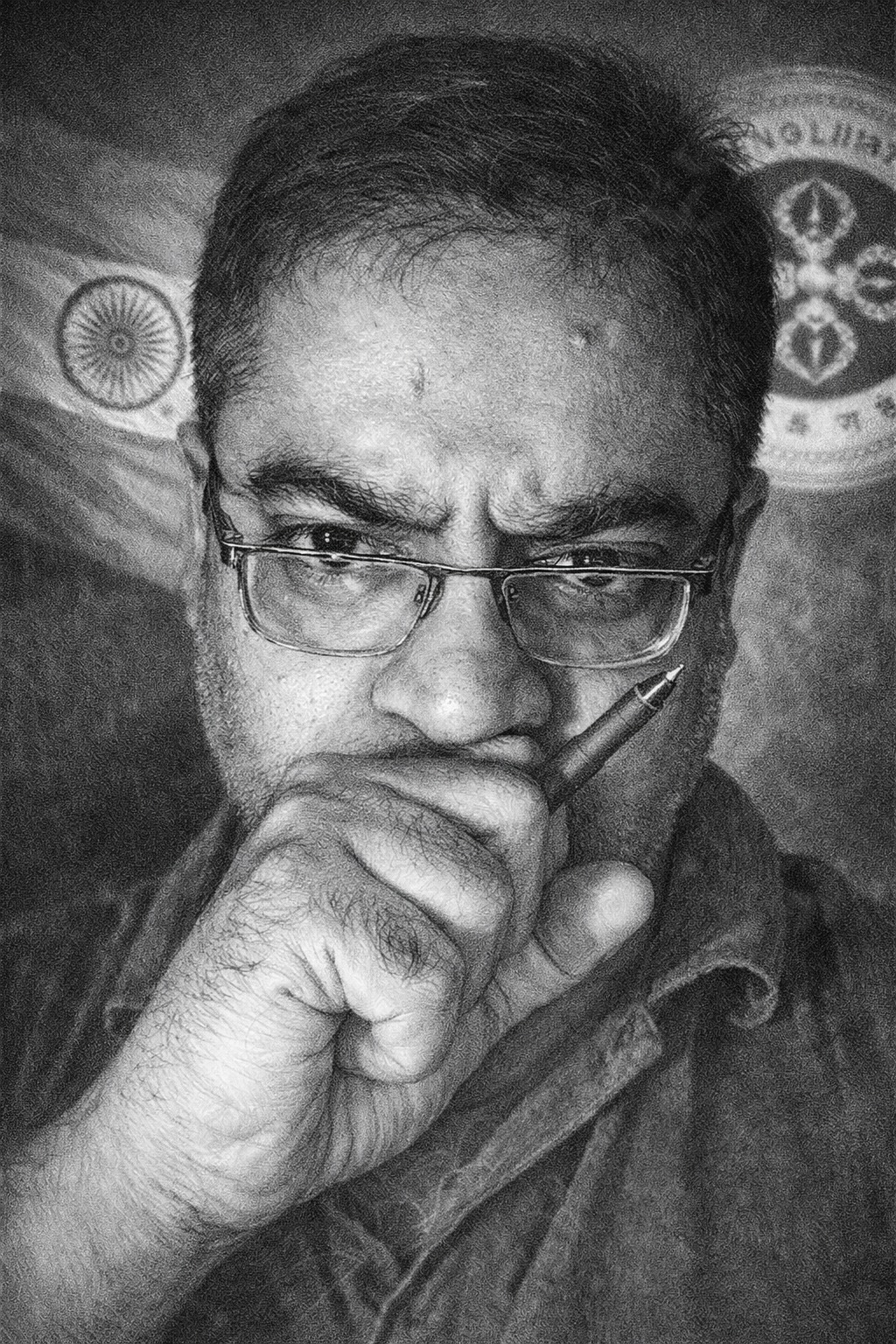
শ্রী অনিমিত্র চক্রবর্তী হলেন একজন সাংবাদিক ও বিভাগীয় লেখক (columnist) এবং বেঙ্গল ভলান্টিয়ার্সের এক সক্রিয় কর্মী।