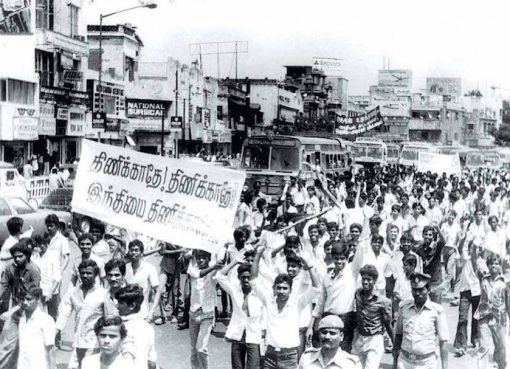


Few public policies in independent India have generated as much praise, criticism, and continuing debate as the land reforms undertaken in West Bengal after the Left Front assumed office in 1977. Supporters regard them as one of the country’s most successful agrarian reforms, arguing that they empowered sharecroppers, redistributed surplus land, and altered rural power structures. Critics, however, contend that the reforms were unevenly implemented, generated decades of litigation, and in some cases adversely affected legitimate landowners, including religious endowments. Nearly five decades later, the legacy of those reforms remains the subject of historical, legal, and political debate.
When the Left Front came to power, rural West Bengal was marked by unequal land ownership, insecure tenancy, and widespread poverty among agricultural labourers. The government’s response centered on two principal initiatives: identifying and redistributing ceiling-surplus land and implementing Operation Barga, which sought to record sharecroppers (bargadars) and protect them from arbitrary eviction. Millions of cultivators benefited from formal recognition of their tenancy rights, and hundreds of thousands of acres were redistributed to landless or marginal farmers. Many scholars credit these measures with improving rural bargaining power and contributing to agricultural growth during the late 1970s and 1980s.
For many beneficiaries, the reforms represented a profound social transformation rather than merely an economic programme. Families that had cultivated land for generations without legal protection suddenly acquired recognized rights. Rural political participation expanded, and the influence of large landholders declined in many districts. Economists have argued that greater tenure security encouraged investment in cultivation and contributed to improvements in agricultural productivity during the early years of the programme.
Yet the reforms were never free from controversy. From their earliest implementation, disputes arose over land classification, ceiling calculations, exemptions, and the identification of surplus holdings. Thousands of cases reached revenue authorities and the courts, with landowners challenging vesting orders and the State defending its interpretation of the law. Many disputes turned not on the principle of redistribution but on whether specific parcels of land had been correctly classified under the relevant legislation.
Among the more legally complex issues were disputes involving Debottar (also spelled Devottar) properties—lands dedicated to Hindu deities or religious institutions. Under Hindu law, a deity is recognized as a juristic person capable of owning property, while the shebait functions as the manager rather than the owner. During the implementation of land ceiling laws, authorities examined whether certain religious endowments were genuine or whether they had been structured primarily to avoid statutory ceilings. These questions frequently reached the Calcutta High Court, where judges assessed the evidence on a case-by-case basis.
Supporters of religious institutions argue that some genuine endowments became entangled in lengthy legal proceedings, imposing financial and administrative burdens on temples and trusts. They contend that litigation itself, regardless of its eventual outcome, affected the management of religious properties and charitable activities. Others argue that greater legislative clarity regarding religious endowments could have reduced uncertainty and prolonged court battles.
On the other hand, successive governments maintained that land reform laws had to apply fairly and that authorities were entitled to investigate whether claimed religious endowments were authentic. Courts generally did not adopt a blanket approach. Instead, they examined documentary evidence, the history of dedication, patterns of management, and statutory provisions before determining whether particular properties were exempt or liable to vest in the State. As a result, judgments varied according to the facts of each dispute rather than establishing a universal rule.
The reforms also produced broader economic questions that continue to be debated. Critics argue that the subdivision of agricultural land contributed to increasingly fragmented holdings, making mechanisation and large-scale investment more difficult in some areas. Others contend that while tenancy security improved, later governments did not sufficiently complement land reforms with irrigation, market access, crop diversification, or industrial development. Consequently, the initial gains in agricultural productivity became harder to sustain over time.
Another area of debate concerns compensation. India’s constitutional framework has evolved considerably since the early decades after Independence, and land acquisition law has undergone significant change. Any proposal today to revisit historical vesting decisions would face substantial legal and practical challenges. Records may be incomplete, ownership patterns have changed, and many redistributed lands have passed through multiple generations of cultivation. Legal experts therefore caution that broad-based compensation programmes would be difficult to implement without creating fresh disputes.
Nevertheless, specific claims continue to be litigated where parties believe statutory procedures were not followed or where religious endowments contend that their properties were improperly treated under the law. Such cases demonstrate that while the broader policy is a matter of history, individual legal controversies remain very much alive. Courts continue to play a central role in resolving these disputes through established principles of property law, statutory interpretation, and evidence.
Historians also differ in their assessment of the reforms’ long-term political consequences. Some describe them as a defining achievement that reshaped rural Bengal and strengthened democratic participation among cultivators. Others argue that the programme gradually became intertwined with local political structures, leading to allegations of administrative inconsistency and partisan influence in certain areas. These differing interpretations illustrate why the legacy of the reforms remains contested even decades after their implementation.
The debate is further complicated by the absence of comprehensive official data addressing every category of disputed land. While statistics exist regarding redistributed acreage and recorded sharecroppers, there is no widely accepted evidence supporting sweeping claims about the scale of impact on particular categories of religious endowments. As a result, scholars emphasize the importance of distinguishing documented cases from broader historical assertions.
Ultimately, West Bengal’s land reforms cannot be understood through a single narrative of success or failure. They transformed rural society for many cultivators, generated enduring legal disputes for some landowners and institutions, and continue to influence debates over property rights, agrarian justice, and constitutional governance. Nearly fifty years later, the programme stands as one of India’s most consequential experiments in land redistribution—one that delivered significant benefits for many while leaving unresolved legal questions that courts, historians, and policymakers continue to examine.

শ্রী অনিমিত্র চক্রবর্তী হলেন একজন সাংবাদিক ও বিভাগীয় লেখক (columnist) এবং বেঙ্গল ভলান্টিয়ার্সের এক সক্রিয় কর্মী।